
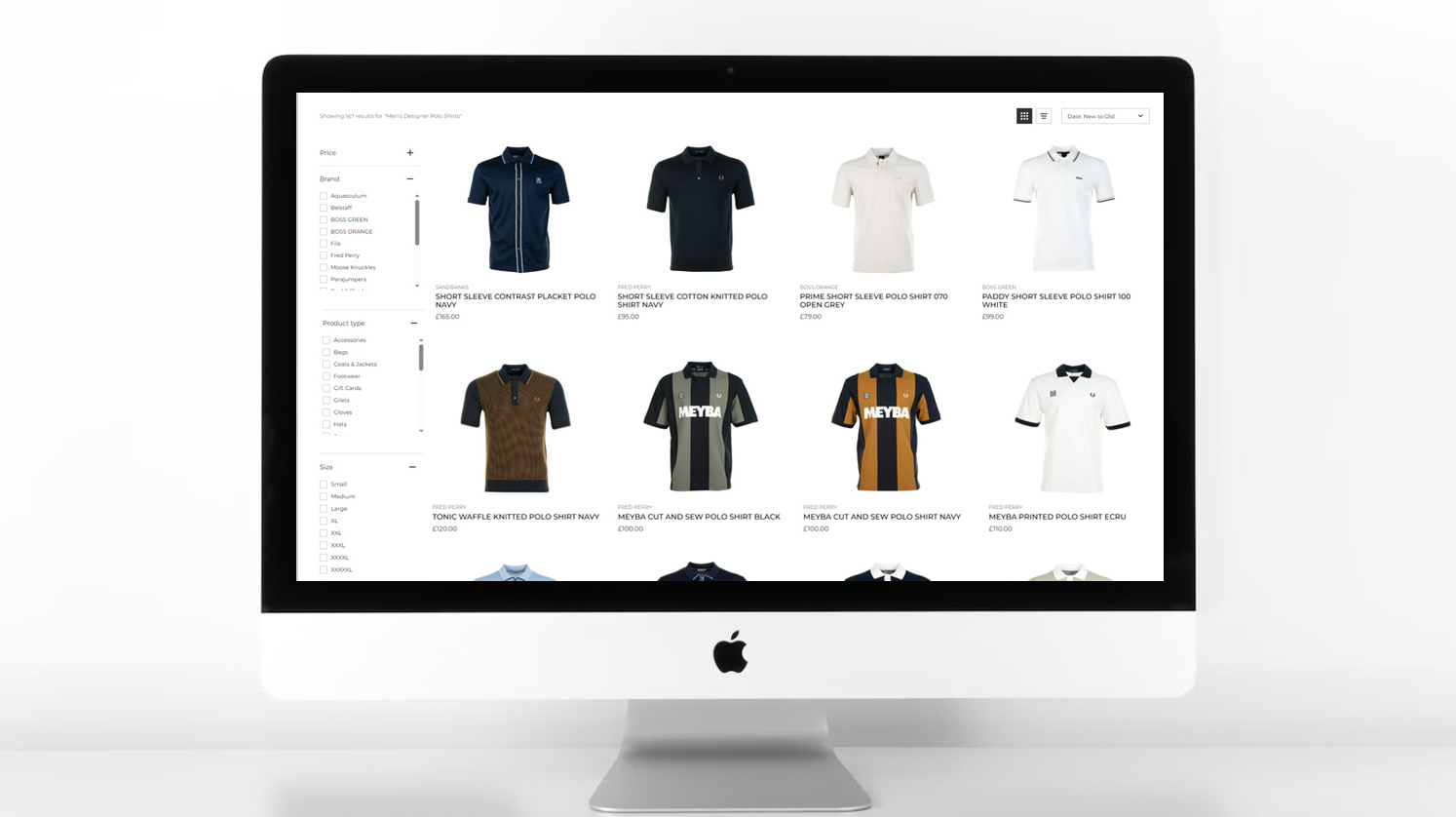
Implemented Searchanise Filtering On Ragazzi
Shopify’s default filtering has a problem that most store owners either don’t notice or accept as normal. When a customer filters by size, it shows every product that exists in that size — regardless of whether it’s actually in stock. They click through, they see “sold out”, and they leave. For a store with over 1,000 active products across multiple premium brands, that’s a conversion killer hiding in plain sight.
Ragazzi had exactly this problem. With a catalogue spanning Stone Island, Moncler, Canada Goose, CP Company and others, customers filtering to their size were regularly landing on product pages with no available stock. The filtering experience was creating dead ends throughout the buying journey at the worst possible point — when someone had already shown clear intent to buy.
I identified this as a priority fix ahead of Q4 2025. The golden quarter is not the time to be losing customers to a UX problem you could have solved in August.
The solution was Searchanise, implemented before Q3 to give enough time to bed in and gather data before peak season. At $74 per month for up to 15,000 products, the cost was minimal relative to the problem it solved. Searchanise allowed us to configure filtering so that size options only surface when stock is genuinely available in that size. Customers filtering to Medium see only products they can actually buy. No dead ends, no frustration, no wasted clicks.
Beyond the headline numbers, the change improved how the site felt to use. Filtering that works correctly is one of those things customers never notice — because when it works, it just works. When it doesn’t, they leave and buy somewhere else.For any Shopify store carrying significant stock depth across multiple variants, this is one of the highest ROI changes you can make. The app pays for itself many times over if your current filtering is showing unavailable products.