

Shopify makes it easy to get started. A monthly plan, a theme, a few products, and within days you’ve got a live store. But the headline subscription price is just the beginning, and many business owners only discover the full picture once they’re already committed.
Whether you’re launching from scratch, weighing up Shopify build against platforms like Magento or BigCommerce, or considering a migration from your current setup, understanding the total cost of ownership before you move is one of the most important steps you can take.
This guide won’t tell you exactly what you’ll pay; every business is different, and the honest answer is that your costs depend on your revenue, your requirements, and the decisions you make along the way. What it will do is help you understand the categories of cost you need to think about, so you can go in with your eyes open.
Shopify do actually have a very simple “True cost of ownership calculator” on their website but I advise that you read on and see the broader picture to ensure you think of everything.
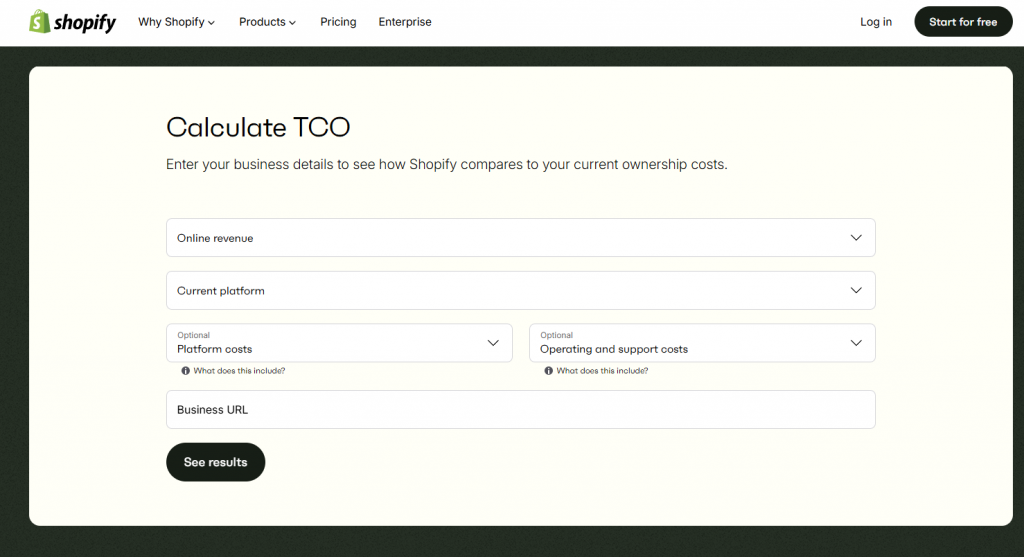
Start With Where You Are Now
If you’re already running an ecommerce store on another platform, one of the most common mistakes I see is comparing Shopify’s advertised plan price directly against the total you’re currently paying. That’s rarely a fair comparison.
Before you can evaluate whether moving makes financial sense, you need to understand your current total cost of ownership. This means getting a clear picture of everything you’re paying for right now, including hosting, security, platform licences, maintenance, developer support, apps, integrations, and anything else that keeps your store running.
On self-hosted platforms like Magento, these costs are often spread across multiple invoices from multiple suppliers, and some, like security patches, server maintenance, and compliance requirements, can be irregular and easy to underestimate. If you don’t have a clear number for what you’re spending today, you’re not in a strong position to evaluate any alternative.
Getting that clarity is step one.
Platform Subscription Costs
Shopify operates on a tiered subscription model, with plans ranging from entry-level through to Shopify Plus for enterprise-scale retailers. The right plan for your business depends on your revenue, team size, feature requirements, and how much you’re willing to pay in transaction fees versus a higher monthly rate.
The platform costs are publicly listed and easy to find. But plan price alone doesn’t tell the full story, what you get at each tier, and what you’ll need to pay extra for, varies considerably.
Transaction Fees
This is one of the areas that catches people out most often.
If you use Shopify Payments (Shopify’s own payment processor), transaction fees are built into your plan. If you use a third-party payment provider, which many businesses do, for various legitimate reasons, Shopify charges an additional transaction fee on top of whatever your payment processor charges.
For businesses processing meaningful volumes, this adds up quickly. It’s worth modelling this against your current costs before making any assumptions about whether Shopify will be cheaper or more expensive to run.
Payment providers also have their own fee structures, dispute handling charges, and contractual terms that are worth reviewing carefully. I’ve seen businesses move platforms and discover that their payment processing costs look quite different from what they expected.
Apps and Integrations
One of Shopify’s genuine strengths is its app ecosystem. Almost anything you need, advanced filtering, loyalty programmes, reviews, subscriptions, upsells, custom reporting — can be added through an app.
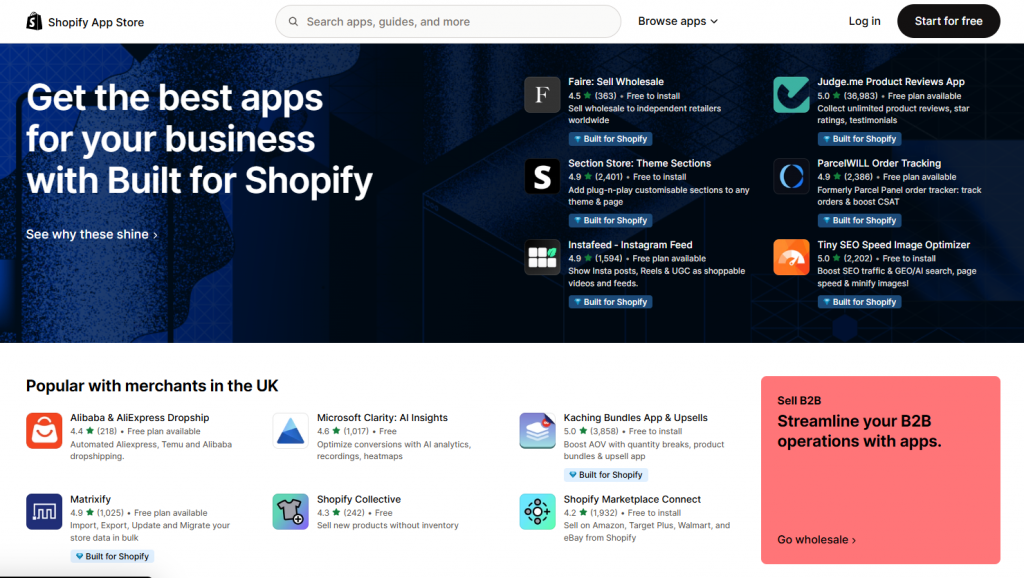
The flip side is that a fully-featured store rarely runs on the default Shopify feature set alone. Most established retailers have a stack of apps, each with their own monthly cost. These can range from a few pounds a month to several hundred, depending on what you need.
Before migrating, it’s worth auditing what your current platform does natively versus what Shopify would require apps to replicate. Some functionality you currently take for granted may need a paid app, or a custom development solution, to achieve on Shopify.
Theme and Development Costs
Shopify’s theme marketplace offers both free and paid themes, and many businesses run well on them with minimal customisation. But if your brand has specific requirements, or you’re migrating from a heavily customised platform like Magento, there’s likely to be development work involved.

Development costs for Shopify can range from relatively modest, for straightforward customisations using Shopify’s Liquid templating language, to significant, if you require complex integrations, custom functionality, or a heavily bespoke design.
It’s also worth factoring in the cost of maintaining your theme over time. Shopify updates its platform regularly, and older themes don’t always keep pace. Budgeting for ongoing development support, even if it’s occasional, is a realistic part of long-term ownership.
Hosting, Security, and Compliance
Unlike self-hosted platforms, Shopify handles hosting and the core infrastructure for you. This is often cited as a major advantage, and for many businesses it genuinely is, you’re not responsible for server management, uptime monitoring, or applying security patches.
However, it’s worth understanding what this means in practice for your business. PCI DSS compliance (the card industry’s data security standard) is largely handled by Shopify for transactions processed through Shopify Payments, but if you use third-party processors or handle card data in other ways, your compliance obligations may be more complex.
Security extends beyond the platform too. Your own practices around user access, data handling, and third-party app permissions all play a role. Understanding where Shopify’s responsibility ends and yours begins is important.
Migration Costs
If you’re moving from an existing platform, migration is a project in its own right, and one that’s often underestimated.
A straightforward product and customer data migration is one thing. But migrating a mature ecommerce store also means thinking about URL structures and redirects (critical for preserving your SEO rankings), replicating integrations, rebuilding automations, and ensuring your data arrives in good shape.
The cost of a migration depends heavily on the complexity of your existing setup and how much of the work you’re able to handle in-house versus what requires specialist support.
Ongoing Management
A Shopify store isn’t a set-and-forget investment. Like any ecommerce platform, it requires ongoing attentio; whether that’s managing your catalogue, optimising your marketing channels, keeping your apps updated, or responding to platform changes.
The question of who handles this, and at what cost, is part of the total ownership picture. Some businesses manage well in-house once they’re up and running. Others need ongoing support from a consultant or agency to keep things running effectively and growing.
What This Means For You
The point of working through all of this isn’t to make Shopify sound complicated, it isn’t, for the right business. The point is that moving platforms is a significant decision, and the businesses that get the most out of Shopify are the ones that went in having thought properly about their requirements, their current costs, and what they want to achieve.
If you’re at the stage of evaluating your options, whether that’s exploring Shopify for the first time, considering a migration, or trying to understand whether your current setup is costing you more than it should, I can help you work through it properly.
I’ve spent 15 years in ecommerce, working across Magento, Shopify, and WordPress, and I understand both sides of the migration question. If you’d like an honest conversation about whether Shopify makes sense for your business and what it would realistically cost to move, get in touch.