
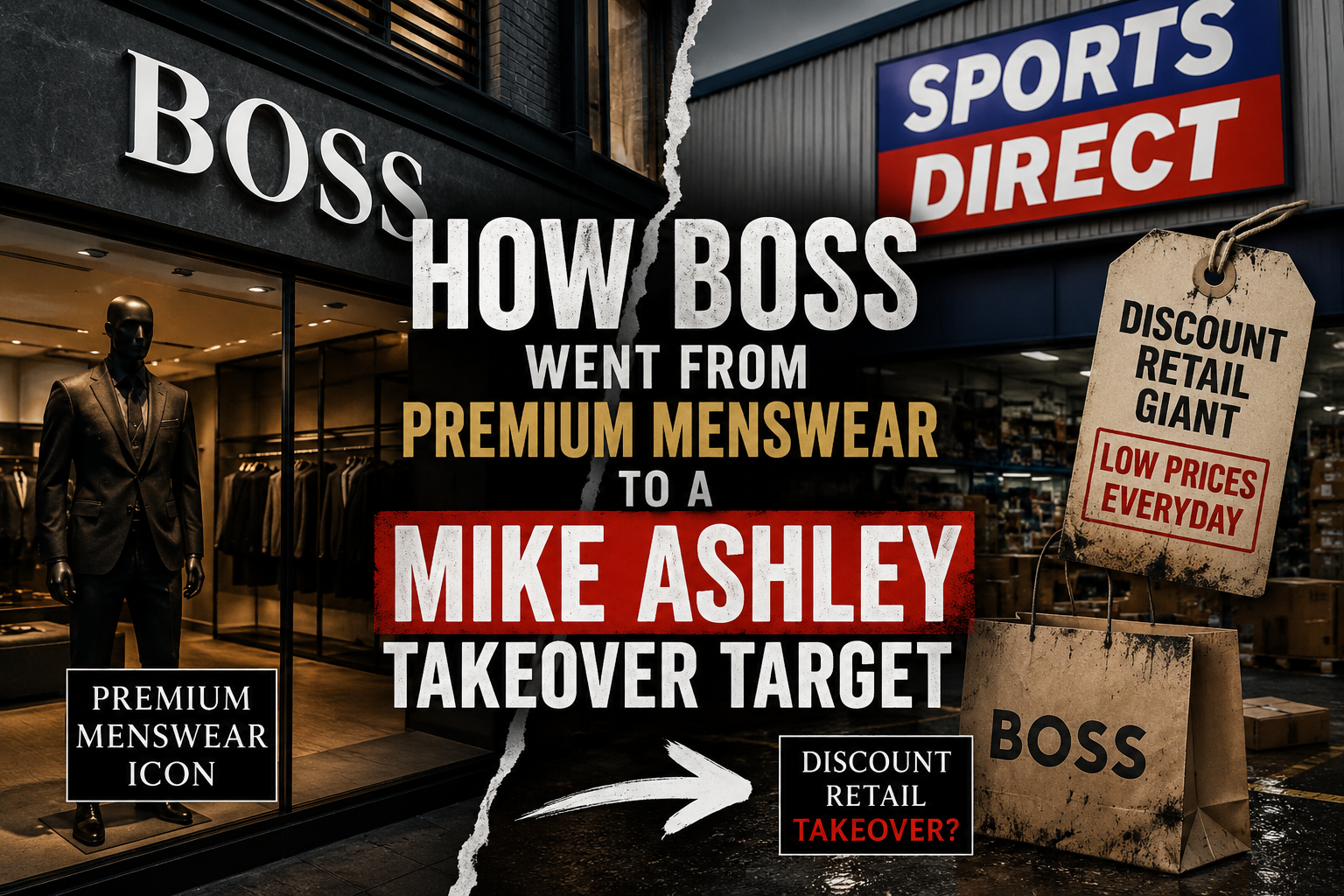
Mike Ashley’s Frasers Group has launched a takeover offer for Hugo Boss, valuing the part of the business it doesn’t already own at around €2bn. To me, that isn’t a shock but rather a logical end point of a brand that has mismanaged its own positioning for years, and there’s a lesson in it for any retailer who thinks branding is the soft, harmless part of the business.
For the record, I’m a Newcastle United fan, so Mike Ashley isn’t my favourite person as you’d probably expect, but I respect him as a businessman.
As an ecommerce consultant, I’ve worked with the BOSS brand in various capacities for the last 15 years, and what follows is an impartial read on how a brand stocked by some of the biggest retailers in the world ended up discounted in Sports Direct and on a takeover list alongside Slazenger, Dunlop and Karrimor.
What it was actually like to stock BOSS (and some of this still stands)
When I was at Aphrodite, an independent fashion retailer as the Head of Ecommerce, BOSS (formerly known as Hugo Boss then) enforced brand guidelines harder than anyone else we worked with. Each season a marketing pack would land with a list of demands:
- SEO text you were required to put on your BOSS pages
- A restriction to their supplied imagery for homepage banners and promo areas, imagery that was often useless for what you’d actually bought that season
- A dedicated landing page to act as a doorway for all the BOSS sub-brands, which is no small ask when you’re on Magento and every build carries a dev cost
- The usual spacing, colour and logo rules
The SEO text was the one that mattered. They wanted every stockist running the same copy they supplied. I pushed back and explained that you were handing your hard-won search position straight back, and walking into duplicate content problems on top. Yet it made no difference. I was just a small fish in a big pond with no say. You followed the rules or you didn’t get the next season’s allocation.
The BOSS rebrand that threw years of SEO in the bin
Around the same time came a restructure. BOSS (then Hugo Boss) had long been split into sub-brands. From memory it was Hugo Boss Green, Hugo Boss Orange and Hugo Boss Black, and we’d built up real search value and customer recognition for each one. People knew what BOSS Green was, as their sportier offering associated with golf etc.
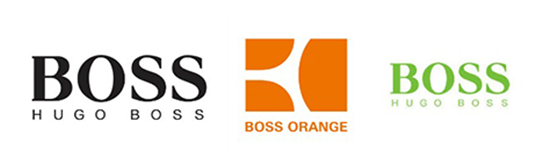
Then BOSS decided Hugo Boss Green would become BOSS Athleisure (sounds more premium I guess), with a BOSS Bodywear, BOSS Footwear and the rest to follow. “Hugo Boss” could no longer appear in product copy, and HUGO was spun off as its own brand. Years of SEO equity and customer familiarity, gone in a single season.
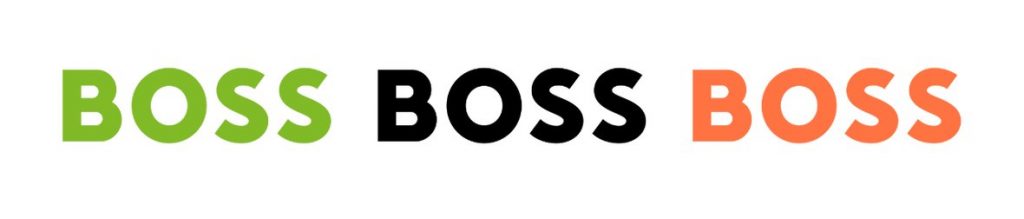
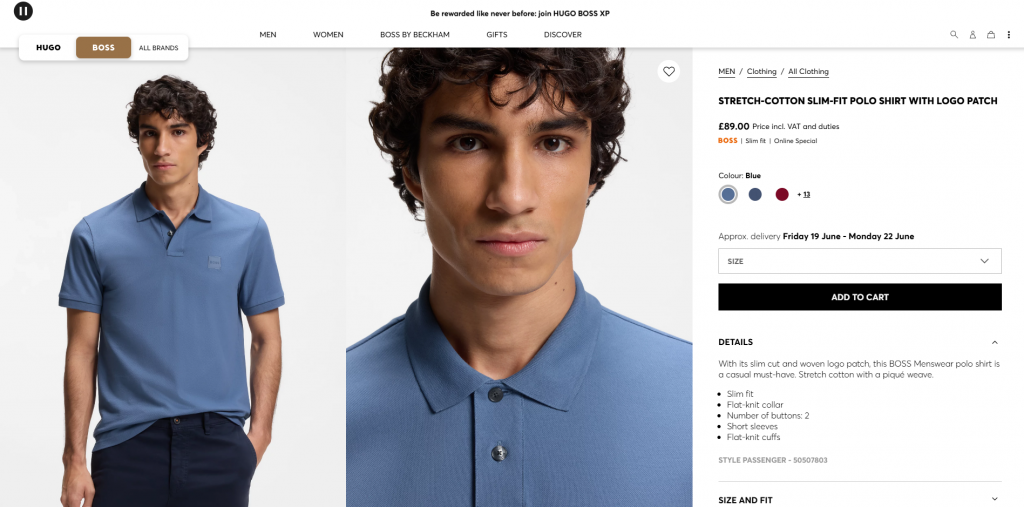
A few years later, someone looked at it again and decided it wasn’t working. BOSS Athleisure quietly went back to being Green. This time, though, BOSS had to be capitalised everywhere, and the sub-brand became a colour cue rather than a name. Go on the official BOSS site now and a product won’t tell you it’s Green or Orange. You’re expected to infer it from the colour of the logo on the page.
If you’ve ever tried to optimise a catalogue, you’ll know what that does. Your customers can’t and don’t search for a thing they’re no longer given a name for.
Where BOSS sits today
Ask the average shopper and they’ll say they bought a Boss t-shirt, or a Hugo Boss t-shirt. They’ve never heard of the brand architecture above it. What the brand actually offers now is:
- BOSS (top-level brand)
- HUGO (top-level brand)
- No BOSS Green, no BOSS Orange.
In their place sit collaborations: Beckham x BOSS, Porsche x BOSS, BOSS x Aston Martin. The intent is clearly to elevate the brand, and the retail stores have been fitted out to match, all formalwear and polish. Every time I walk past one, there are very few customers in.
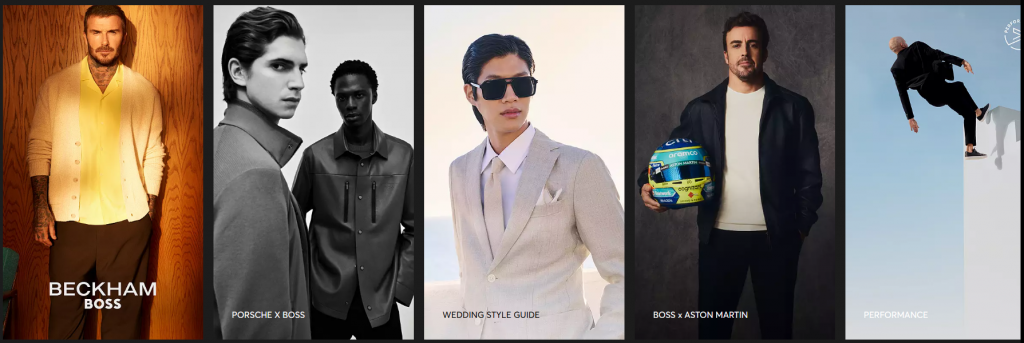
Meanwhile the products that sell are the BOSS polos and tees that the average bloke actually wants, and the catalogue is full of them. The premium repositioning and the thing that pays the bills are pulling in opposite directions.
The current dilemma this creates for independent retailers
Here’s where it gets awkward for the independents. My view from working with some independents is that the brand is struggling to retail at full price, and the symptoms show up on the stockists’ books.
Retailers are pushed to grow their seasonal budget and buy more, even when last season hasn’t sold through. A lot of that stock then only moves under continual discounting in Google Shopping, where the customer is just looking for the cheapest listing. The product ranges feel repetitive and safe: the same silhouettes every year in a new colour. Shoppers and retailers are getting bored.
Plus Ashley has already thrown his hat into the ring by dropping BOSS into Sports Direct, something TK Maxx have done for years at discounted rates. The Sports Direct name signals discount, not premium. There’s no question about that. Pair that with multi-buy offers while independents are still trying to sell the same products at full price, and you reinforce a discount culture around a brand that wants to be seen as luxury.
I should warn, BOSS isn’t the only brand walking this road, and any brand that values its positioning should think hard before getting into bed with Sports Direct.
So the independent looks at the year-end sheet, sees a big revenue number against BOSS because they keep buying more of it, and has to decide. Do you keep feeding a brand that’s getting harder to sell at full margin, or move that budget into brands that might bring in less up front but leave you with a healthier margin? It’s a hard call, and not one I’d make for anyone. I’ve raised the concern with a few retailers over the past year and left the decision with them.
What every brand should take from this
The takeover may not happen, and they may suprise me by handling the product differently even if it does go ahead. But the point still stands around the branding and marketing.
It’s a clear example of how a brand can go from celebrities wearing it and a clear premium standing, to being racked up in Sports Direct and TK Maxx, to sitting on a takeover list next to Slazenger, Dunlop and Karrimor.
Some of that is wider market pressure. A lot of it, in my view, is self-inflicted:
- repeated renames that confused customers and wrecked search visibility
- supplied marketing that didn’t fit the retailers using it
- slide into discount channels that undercut the premium feel.
Branding is important. It’s not just a logo. Handled without care, it quietly dismantles the proposition you spent years building, and you don’t feel it until the revenue line stops covering for it.
FAQ
Why is Frasers Group trying to buy Hugo Boss?
Frasers, controlled by Mike Ashley, has held a stake in Hugo Boss for several years and has now offered to buy the rest, with completion targeted for the second half of 2026. It fits a long-running Frasers pattern of building a stake in a brand it already works with, then moving for full control.
Is BOSS a premium or a discount brand now?
Officially premium, with elevated stores and high-profile collaborations. In practice it is widely discounted in Google Shopping and now sits in Sports Direct (USC) and TK Maxx, which pulls the perception towards the discount end whatever the brand intends.
What happened to BOSS Green and BOSS Orange?
They were renamed (Green became BOSS Athleisure for a time), then partly reversed, and the sub-brand names were dropped from the official site in favour of colour-coded logos. The structure today is two brands, BOSS and HUGO.
If any of this resonates with you and you want to discuss your independent fashion business, contact me and we can jump on a call and see how my experience in the industry can help grow your online store.